Beth McMullen
Each month, we’re featuring an advocate who engages with policymakers to ensure priorities that improve the lives of people impacted by Alzheimer’s and all other dementia remain top-of-mind in Congress.
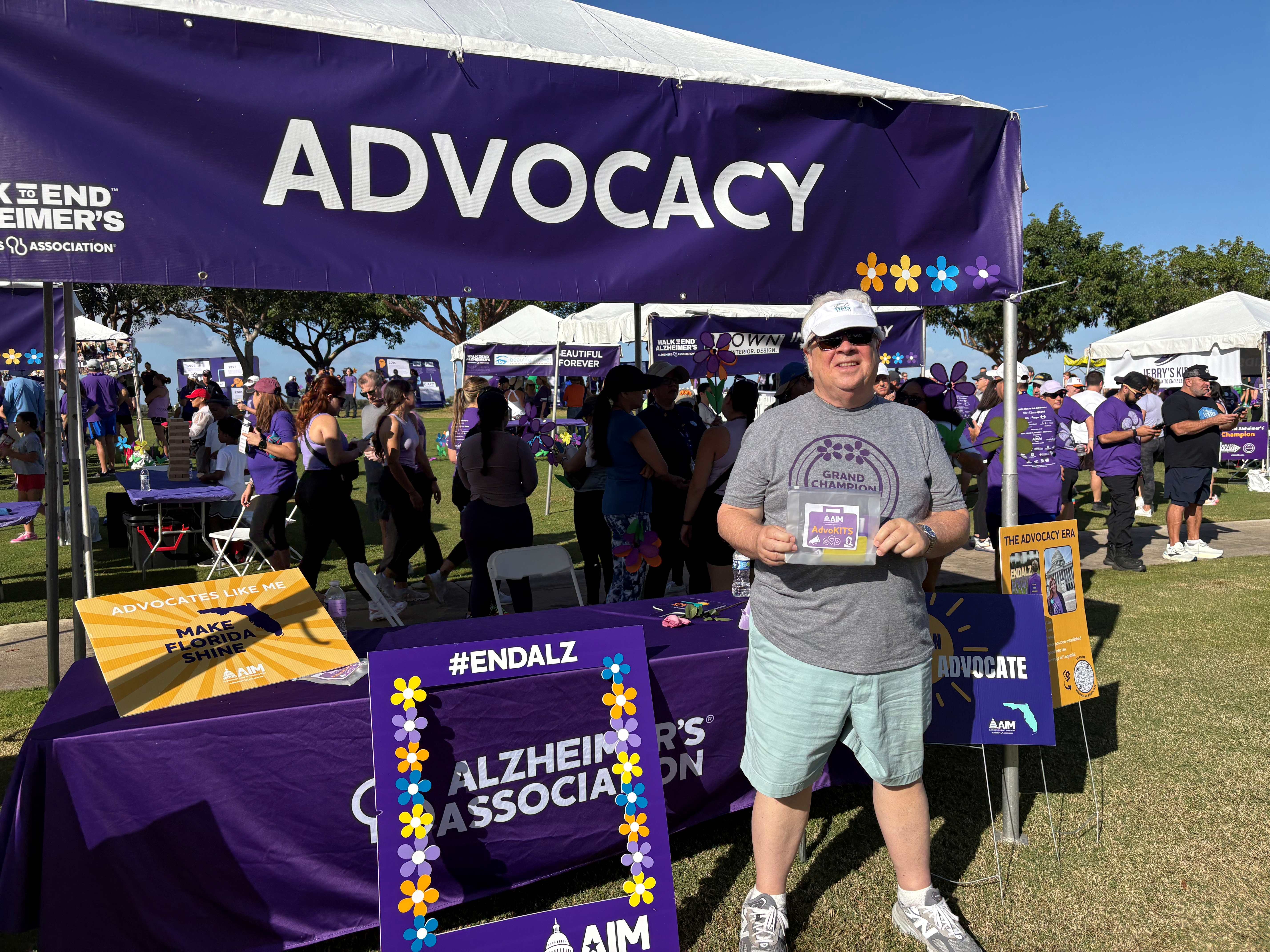
John Strader has always known how to close a deal. As a yacht broker for 30 years in South Florida, he built a career on relationships, persuasion and a strong work ethic. Now retired, John has turned those same skills toward a new mission: advocating for his wife of 46 years, Lisa, who is living with Alzheimer’s, and the millions of Americans affected by Alzheimer's and other dementia. What started with seeking out caregiver support has evolved into legislative testimony, annual trips to Washington, D.C., and real policy wins in Florida.
First connected with the Alzheimer's Association through a caregiver support group, John witnessed firsthand the financial and emotional toll the disease takes on families — particularly those without the resources to navigate it. “There is no other disease that devastates a family's resources the way this one does,” said John.
From families forced to navigate care with young children at home to insurance barriers for desperately needed mental health support, he found himself moved — and motivated to take action. It was through that caregiver support group that he first learned about advocacy.
John soon found that his sales background gave him a framework for the work. “At the end of the day, what we do — we have a product, which are our legislative priorities, and we are selling them to the legislature,” said John. That direct, relationship-driven approach has made him an effective and trusted voice at both the state and federal level.
John attends the AIM Advocacy Forum in Washington, D.C., each year and Florida's State Advocacy Day — known locally as the “Rally in Tally” — where he often leads one of the advocate teams meeting with legislators.
His advice to those new to advocacy who sometimes feel hesitant about sitting across from an elected official reflects both his experience and his temperament. “After a while, you realize they’re just people like us,” said John. “Try not to be intimidated or worried that you’re going to be rejected, or you're going to get pushback. Generally speaking, they welcome us with open arms.” The reason, he says, is straightforward: “They love being on the right side of an issue [like addressing Alzheimer’s] …At the end of the day, you’re showcasing your story for the people in the legislative world that need to hear it.”
This year, one of their state legislative priorities was advancing legislation for a statewide Alzheimer’s public awareness campaign. John emphasized the urgency of reaching more Floridians with information about early detection and the importance of timely diagnosis, particularly as new treatments become available. “With the new treatments and the new diagnostics, it’s more critical than ever to get diagnosed early and get treated early, because the efficacy of the drugs is far better in the early stages,” said John.
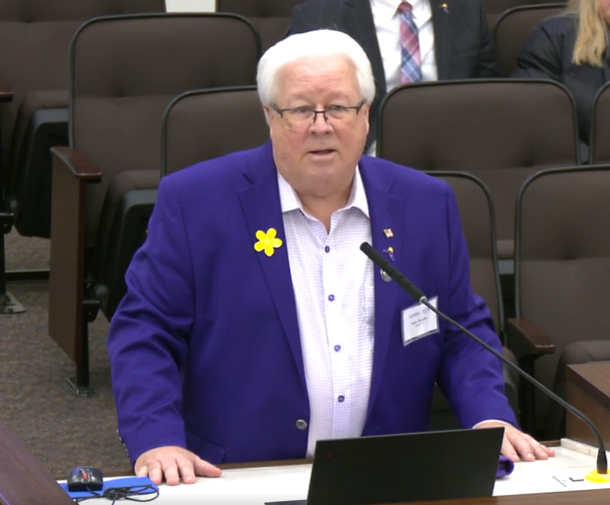
When the bill was set to come before a legislative committee, John was asked if he could stay an extra day after their state advocacy day to testify. He quickly agreed, and without prepared remarks, John drew on his own experience of the challenges they faced to find the right information and get his wife diagnosed. The bill passed the committee unanimously, advanced to the floor, and has now been passed with overwhelming support by both the House and the Senate. Along with the public awareness campaign legislation, advocates also secured passage of legislation to establish oversight standards for memory care — both wins that will have real impact for Florida families impacted by dementia.
John is also a dedicated member of AIM’s Leadership Society, the philanthropic foundation of AIM committed to advancing AIM and the Association’s policy priorities. “For those of us who are passionate and who have the resources and the capacity: it’s time to step up,” said John.
Beyond his advocacy work, John co-chairs the board of directors for the Southeast Florida Chapter of the Alzheimer’s Association, fundraises for the Walk to End Alzheimer’s and serves on the Dementia Care and Cure Initiative Task Force, an initiative supported by Florida’s Department of Elder Affairs charged with developing dementia caring communities in his county.
John doesn’t frame his advocacy and volunteer work as a lifelong calling — he came to it later in life, when his personal circumstances and his professional skills converged around a cause that needed both. “We all need a purpose,” said John. “To wake up in the morning and do what we do. This became my purpose.”
That spirit extends beyond policy wins to the community he has found along the way. John takes calls from fellow support group members late at night. He points struggling families toward the Alzheimer's Association's 24/7 Helpline. Above all, he listens. “Not even necessarily talk, but listen,” he said. “To me, that’s an advocate’s role...It’s about sharing the experience.”
For John, it all comes back to showing up — with whatever resources, skills and time you have. “Some of the best friends I’ve got in the world right now are people that I know through the Association,” he said. “Good-hearted people, working hard to deal with what is really a scourge on humanity.”
John’s story is a powerful reminder that advocacy isn’t reserved for experts — it’s fueled by lived experience and the willingness to show up. Join John and thousands of advocates across the country. Become an advocate today. Already an advocate? Learn more about AIM Leadership Society.